Upholsterer's Knots & Stitches
Knots & stitching points to know for the decorative upholsterer
You will find here the essential Knots & Stitching Points to know for reupholstering an armchair, explained and illustrated... everything you need to make these knots & stitches yourself.
The simple loop or dead turn
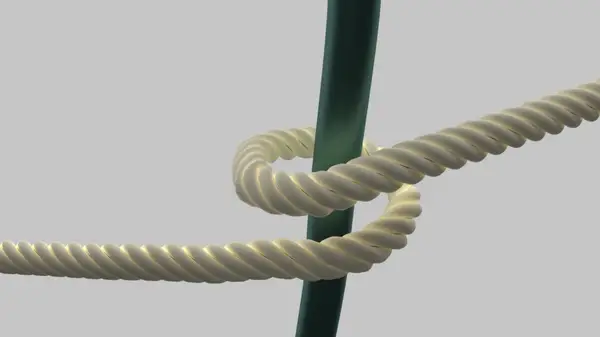
It is used during the first passes of the spring lashing cords over the coils of the springs. It is good practice to alternate the direction of winding between two successive loops, in order to keep the strands well aligned.
How to make an upholstery knot "Simple Loop"?
The half hitch
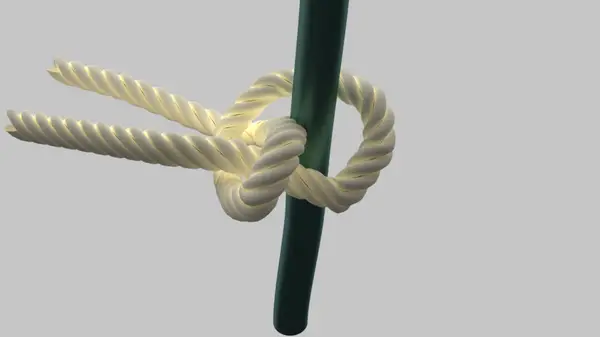
This simple knot does not lock tightly and therefore allows easy adjustment of the strand tension.
It is used, for example, with stitching twine to sew the top of the springs onto the hessian.
Note that the two strands come out of the same side of the knot.
How to make an upholstery knot "Half-Hitch"?
The half knot
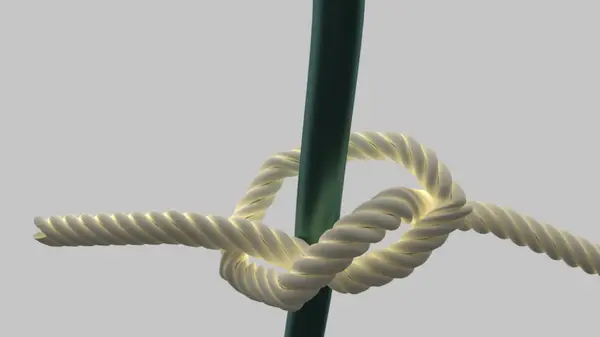
It is a variant of the half hitch when the two strands are placed on either side of the knot.
How to make an upholstery knot "Half-Knot"?
The capstan knot
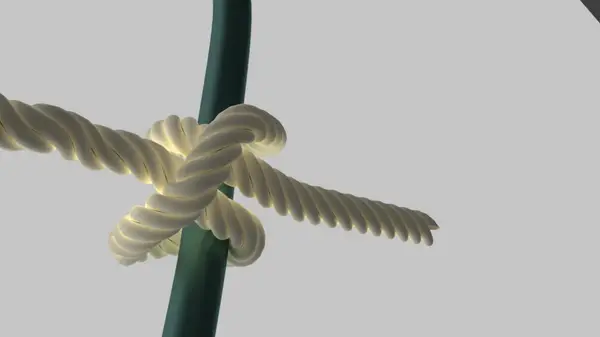
It is a knot very commonly used for mooring boats and also as a belay knot in climbing, because it is easy to tie with one hand to attach the rope to a carabiner.
In upholstery, it is used to adjust the tension between the first and second coil of a border spring during suspended spring lashing.
How to make an upholstery knot "Capstan Knot"?
Second pass spring lashing knot
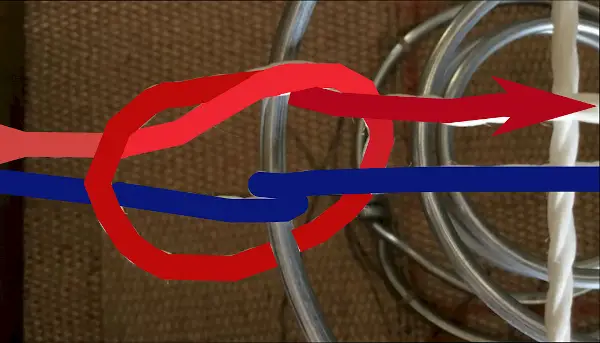
The loop of the blue spring lashing cord was placed during the first pass.
The red cord of the second pass comes from the top (light red). It begins a loop around the spring:
- it goes under the spring to the right of the blue twine
- it comes up over to the left of the blue twine
After tightening the cord, block it against the spring by pressing with a finger.
The red cord completes its loop by passing over the two cords:
- it goes under the spring by passing through the loop
- it comes back up (dark red) next to the blue cord
How to make an upholsterer's knot "Guindage Knot"?
Front tacking stitch
Front tacking stitch of a horsehair trim, used for the rows of stitches furthest from the edge.
Back Tacking Stitch
This back tacking stitch is used on the armchair trim, closer to the edge than the front stitch and tightens the horsehair more.
Knotted Back Stitch
This knotted back tacking stitch is used on the roll of the armchair trim, to properly secure the horsehair.
Festoon Stitch
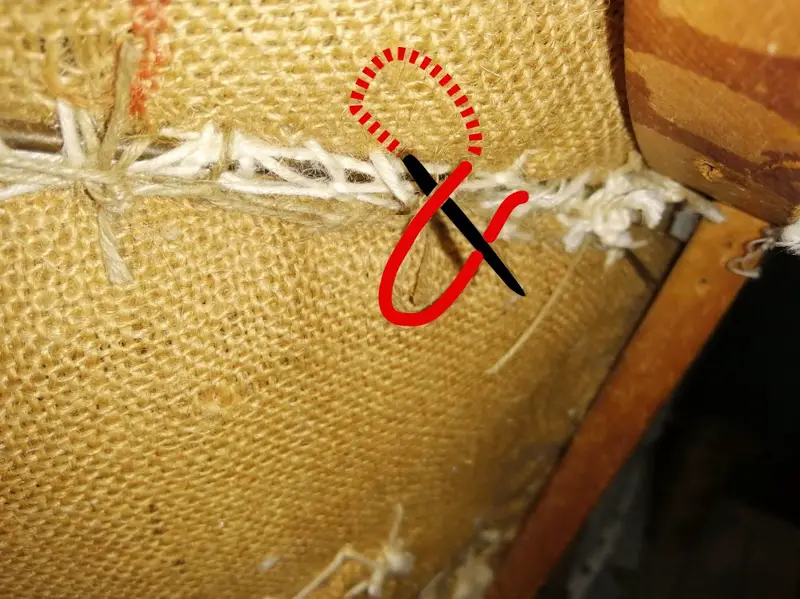
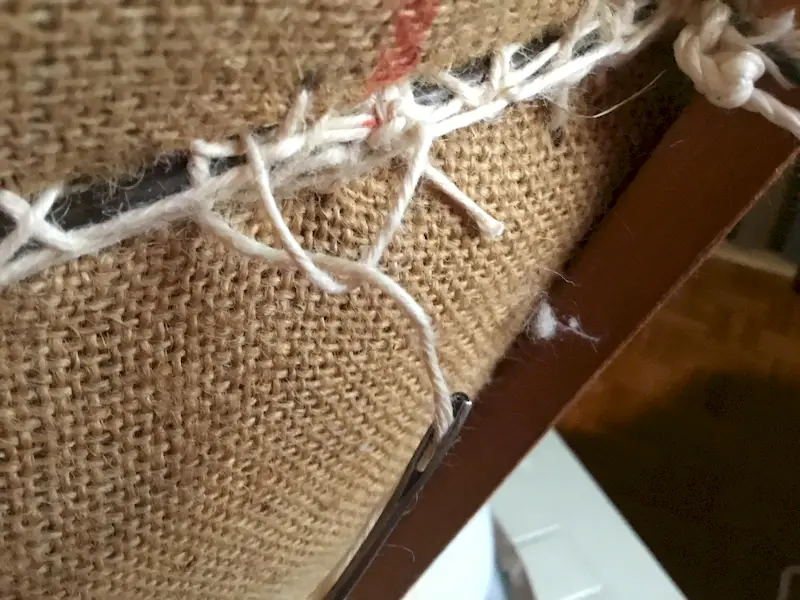
When you bring the needle out near the previous exit point, you pass it over the thread.
Slip Stitch
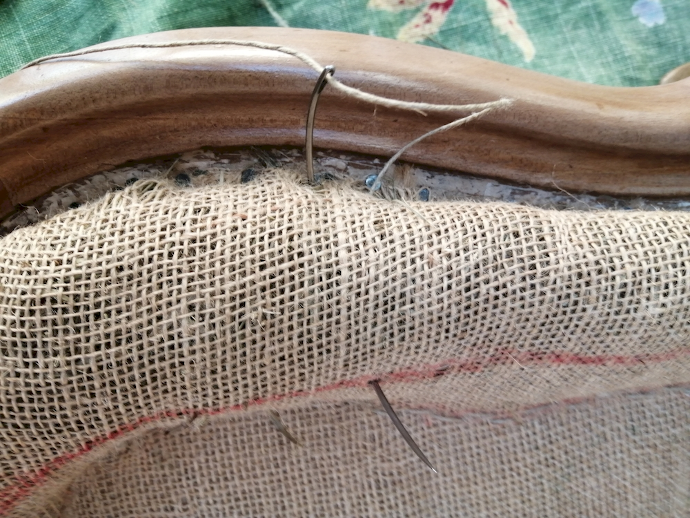
1. The bobbins cross the piping from the seed line to come out on the drawn line, 2 to 3 cm behind the entry point.
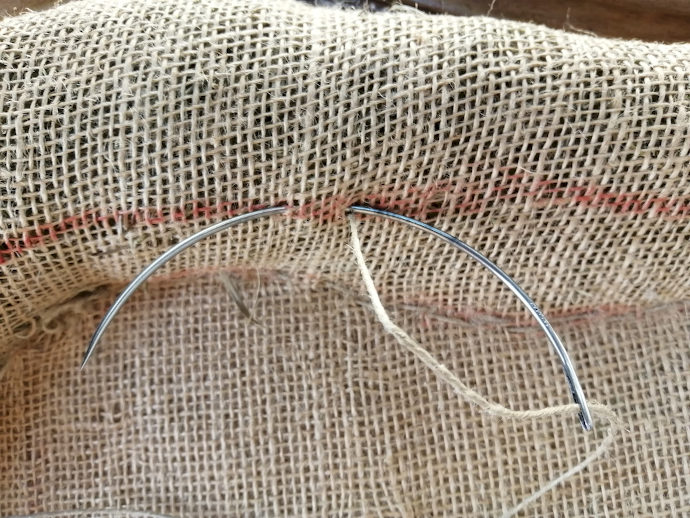
2. The bobbins and thread are cleared; the bobbins are slid between the same threads as the twine exit; they are pushed forward by 3 to 4 cm, between the horsehair and the fabric.
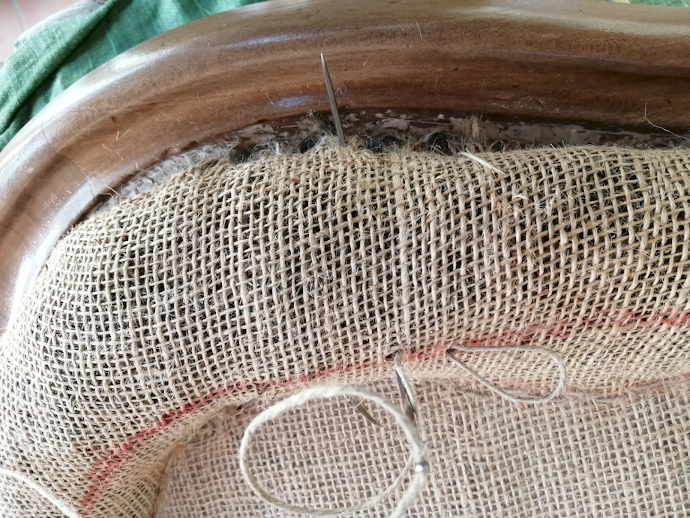
3. The bobbins and thread are cleared; the bobbins are stitched between the same threads as the twine exit to come out level with the seeds, near the first entry point.